Across several weeks, Room 5 read a range of pūrākau (stories), among them Māui and the Sun, and Māui and the Fire. Some belonged to the local area, others came from wider Aotearoa New Zealand. After reading each one, the question was the same: what did you enjoy about this story and why? The point was never which was best or funniest, it is, what was in this particular pūrākau that was worth liking.
Māui and the Fire is interesting because the fire god let Māui have all of her fingers.
My favourite part of Māui and the Sun was when the sun was going way too fast.
That repeated question built a habit. Early on, "I didn't like it" was a common answer. Over time, tamariki began to think and look for something to enjoy within each pūrākau, and to share that thinking with others out loud and in their writing.
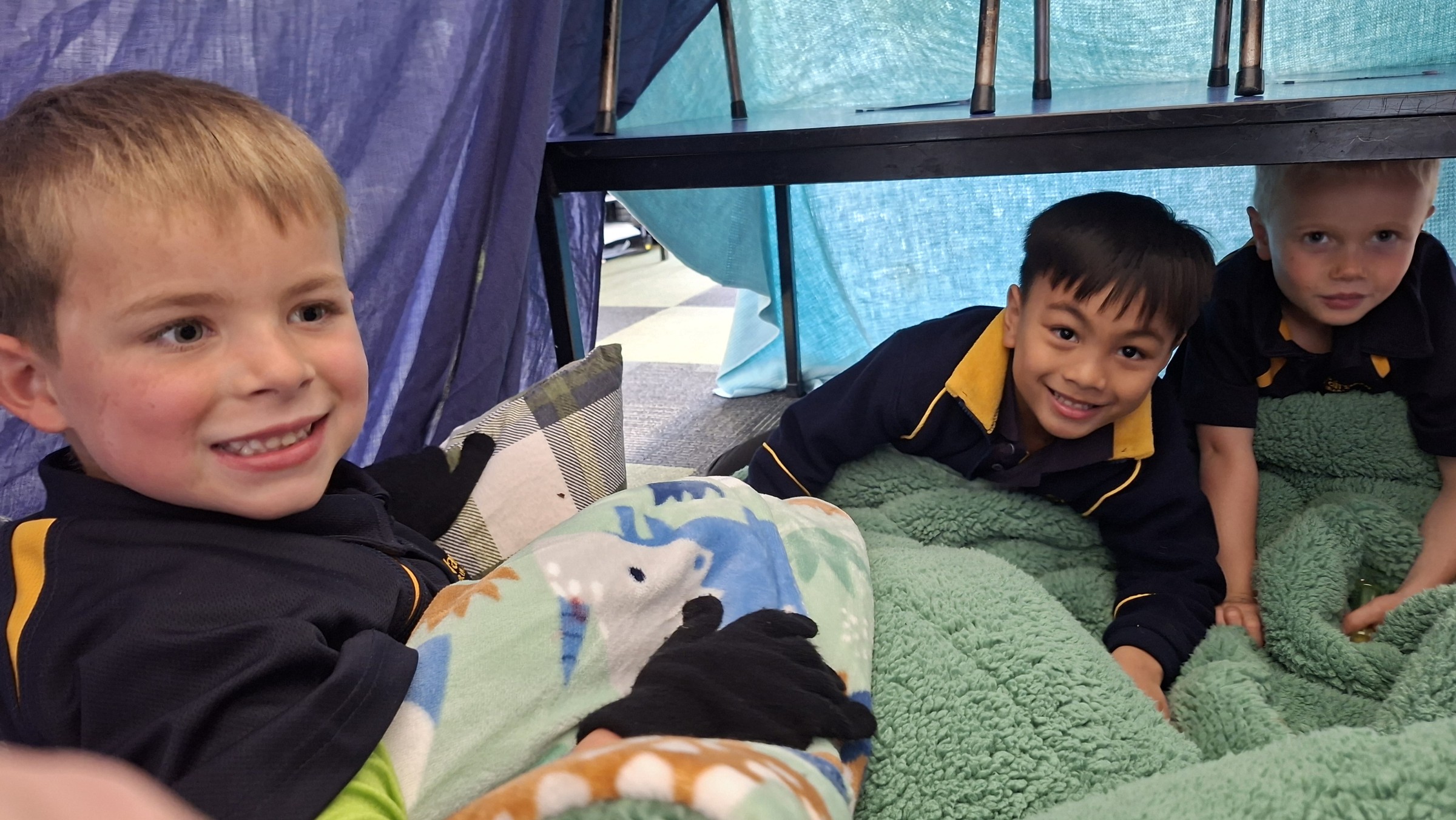
To celebrate, each tamaiti was invited to bring the book they loved most, and Room 5 gathered under one big shared fort of sheets and blankets. Whaea Tori opened the afternoon by reading three books to everyone, and tamariki talked about each one as it finished.
Being read to is never a break from learning to read. Listening is how tamariki hear what fluent, expressive reading sounds like, and how they pick up the language for discussing a story before being asked to do it themselves.
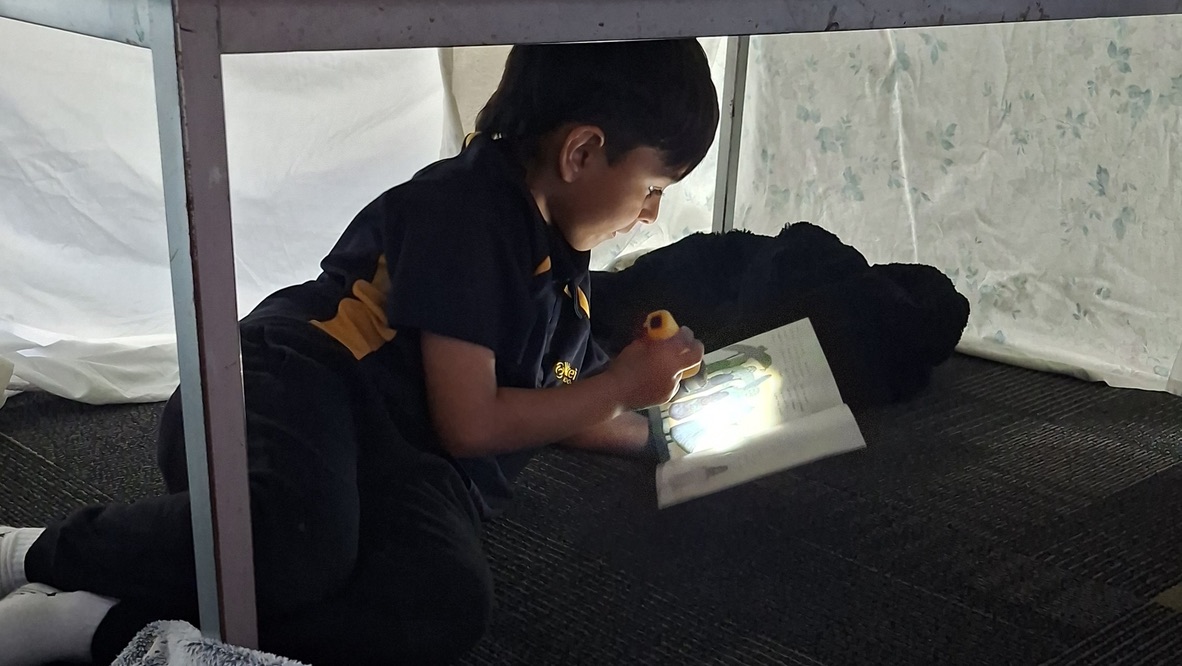
I got to read my books with a torch.
I liked cuddling in my blanket and reading stories.
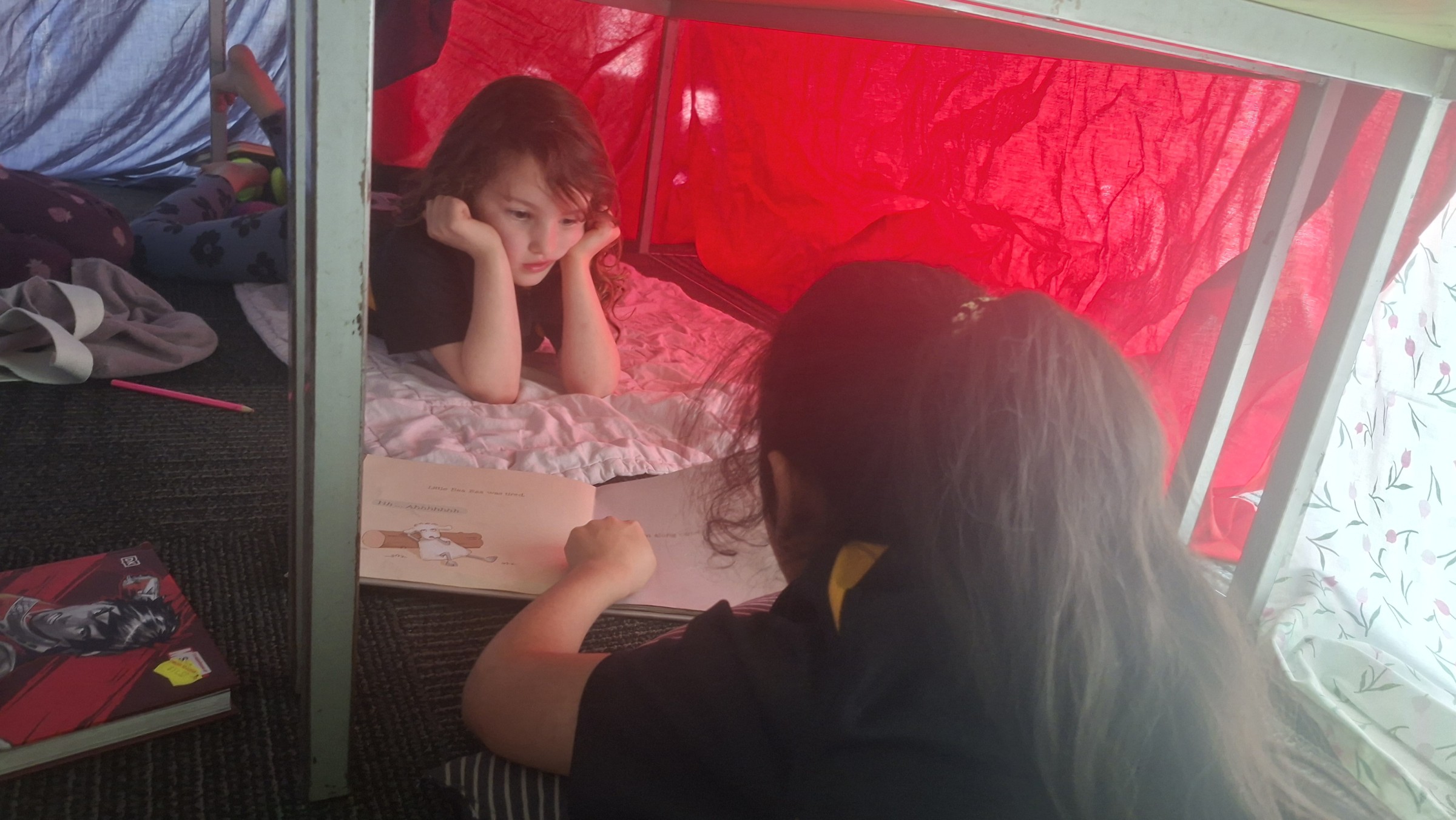
Tamariki shared their favourite books with each other. One confident reader began reading their book aloud, torch in hand, to a classmate, patient and was clearly proud. Reading to someone else asks far more of a child than reading alone, and several tamariki who usually keep their reading quiet chose to do it anyway.
I shared my favourite book to everyone in the entire class.
Vinny let me have a turn with his book.
I was sharing a book with Scarlett.
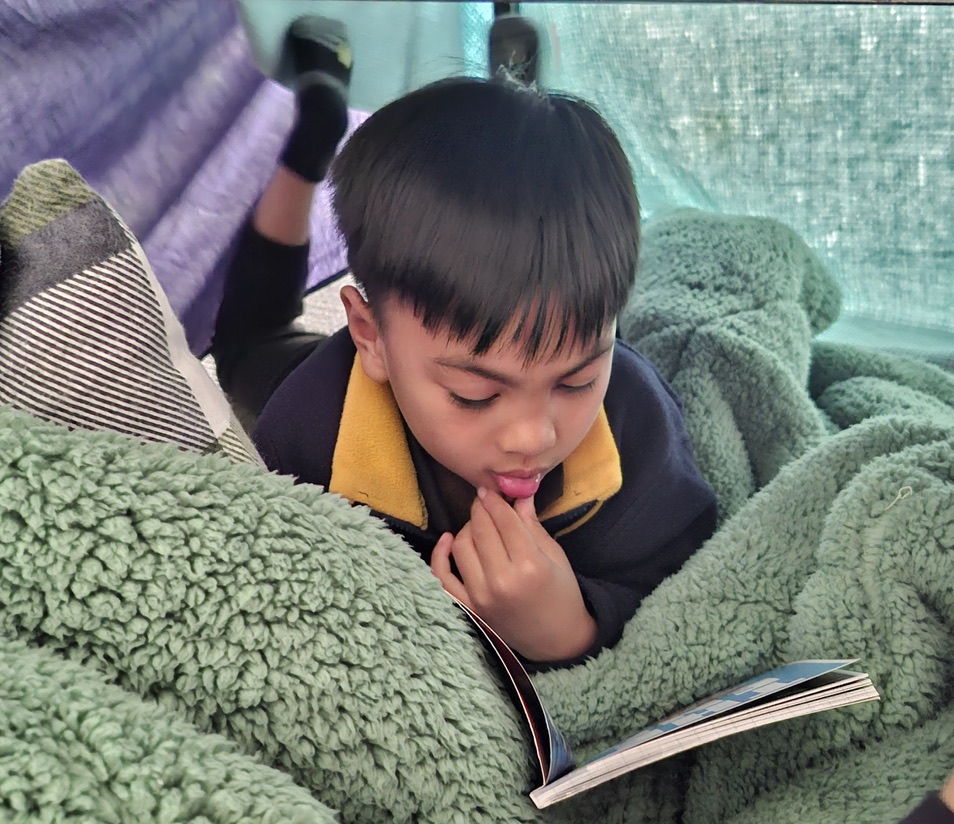
Not all tamaiti could not read their story independently. They shared their favourite parts through the pictures instead, pointing, describing and explaining what they loved.
I liked the page with all the characters in it.
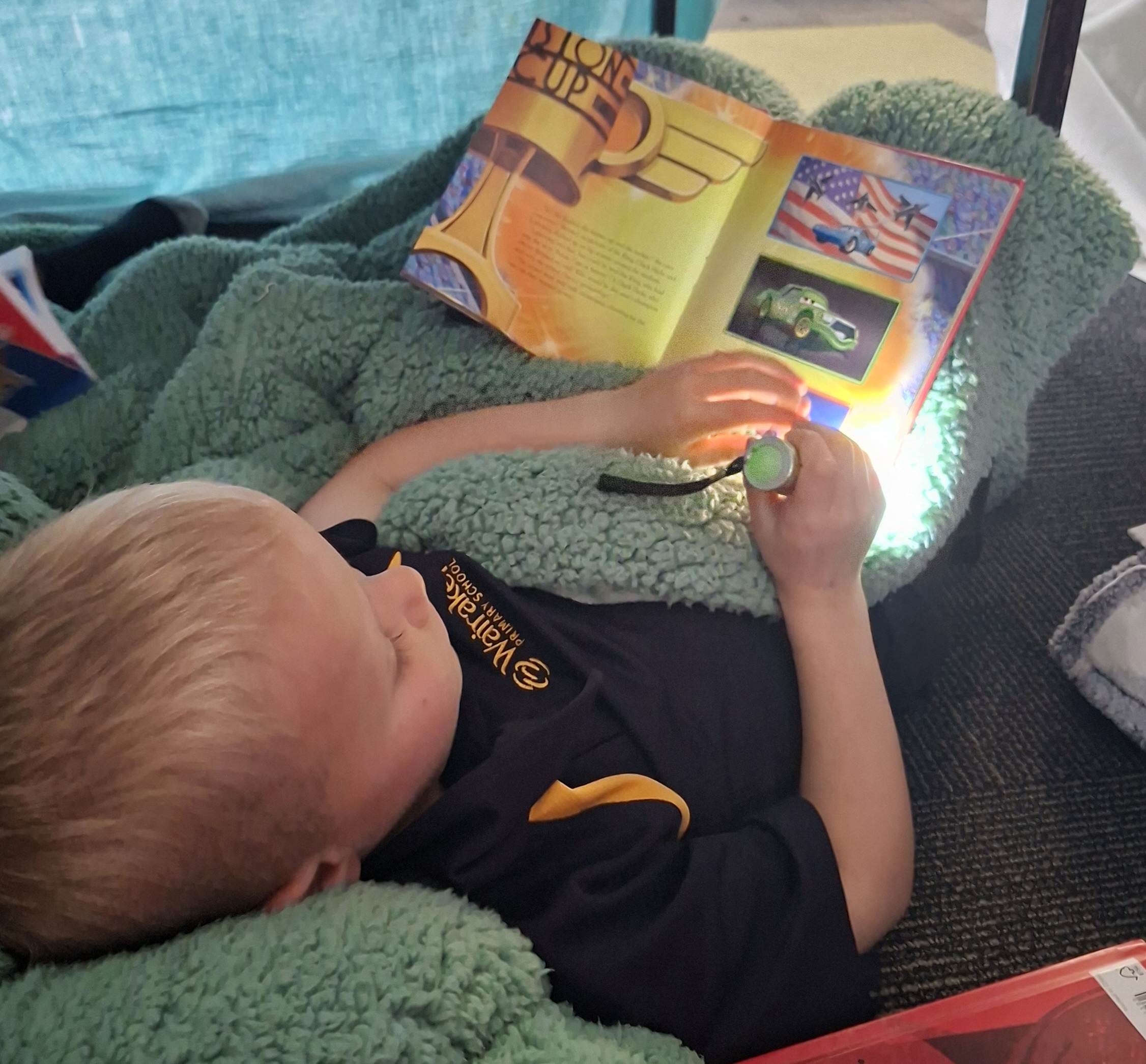
My favourite part of the book was looking at Lightning McQueen.
A tamaiti who has learned to look for something enjoyable in a book about the sun will look for it just as readily in a book about racing or a movie, and that openness is worth more than any single favourite title.
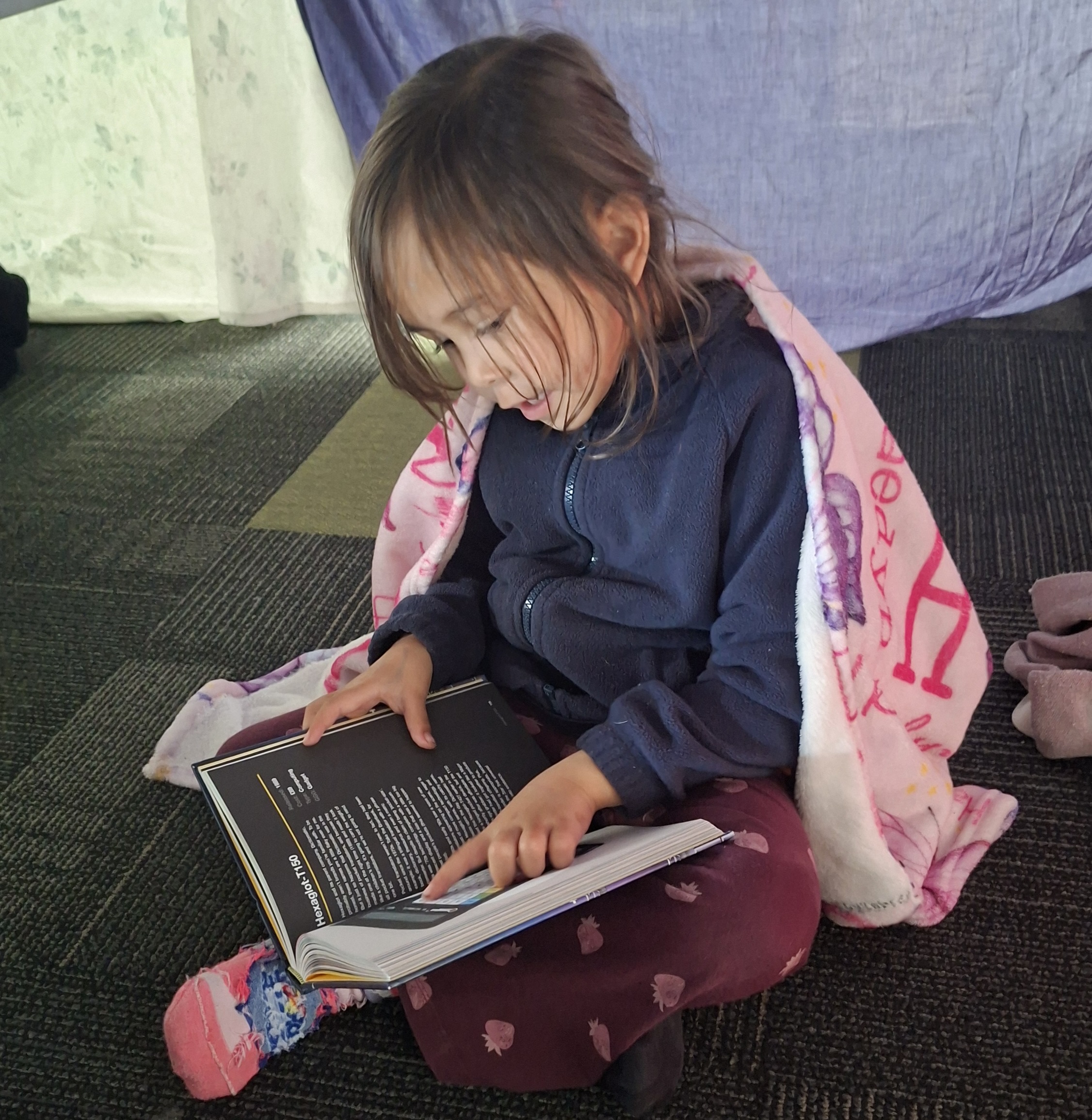
We got to read stories to a friend.
Eight tamariki shared their books that afternoon; no two favourites were the same, and not one child was stuck for a reason why. Celebrating those choices out loud, in front of each other, is how a class transforms reading from something they are asked to do into something they want to do and keep on doing.
Reading is the gateway skill that makes all other learning possible.

Ko Tauhara te maunga e rū nei taku ngākau.
Ko Taupō-nui-a-Tia te moana e mahea nei aku māharahara.
Nō Kōtirana ratou ko Ingarangi ko Ōpōtiki ōku tipuna.
Nō Rongotea ahau.
E noho ana au ki Taupō-nui-a-Tia.
Ko Adam Matthews tōku tāne.
Ko Victoria Matthews (Browne) tōku ingoa.
He manu hou ahau, he pī ka rere." (I am a new bird, a fledgling ready to fly.)
The earliest years of learning are the most powerful and the most precious; watching the youngest ākonga (learners) find their wings and build a lifelong love of learning is what makes this work meaningful. A background in early childhood education offers a unique perspective on building the crucial foundations that set ākonga up for lifelong success.
He tangata, he tangata, he tangata." (It is the people, it is the people, it is the people.)
Strong, respectful relationships with ākonga, whānau (family), and colleagues are central to a teaching practice focused on connection and community. Learning thrives best when the classroom is a place where everyone belongs. Ako, the reciprocal exchange of learning serves as the foundation; knowledge and inspiration flow freely between tamariki (children) and kaiako (teacher). A personal love of cooking, reading and exploring the outdoors naturally find their way into the classroom.
Ehara taku toa i te toa takitahi, engari he toa takitini." (Success belongs not to the individual, but to the collective.)
That collective is the Wairakei whānau and it is together that the greatest potential of ākonga is unlocked. I look forward to working alongside ākonga, whānau, and colleagues in building a classroom and community where all tamariki and whānau belong, feel inspired, love learning and are known.

Comments
No one has commented on this post yet.