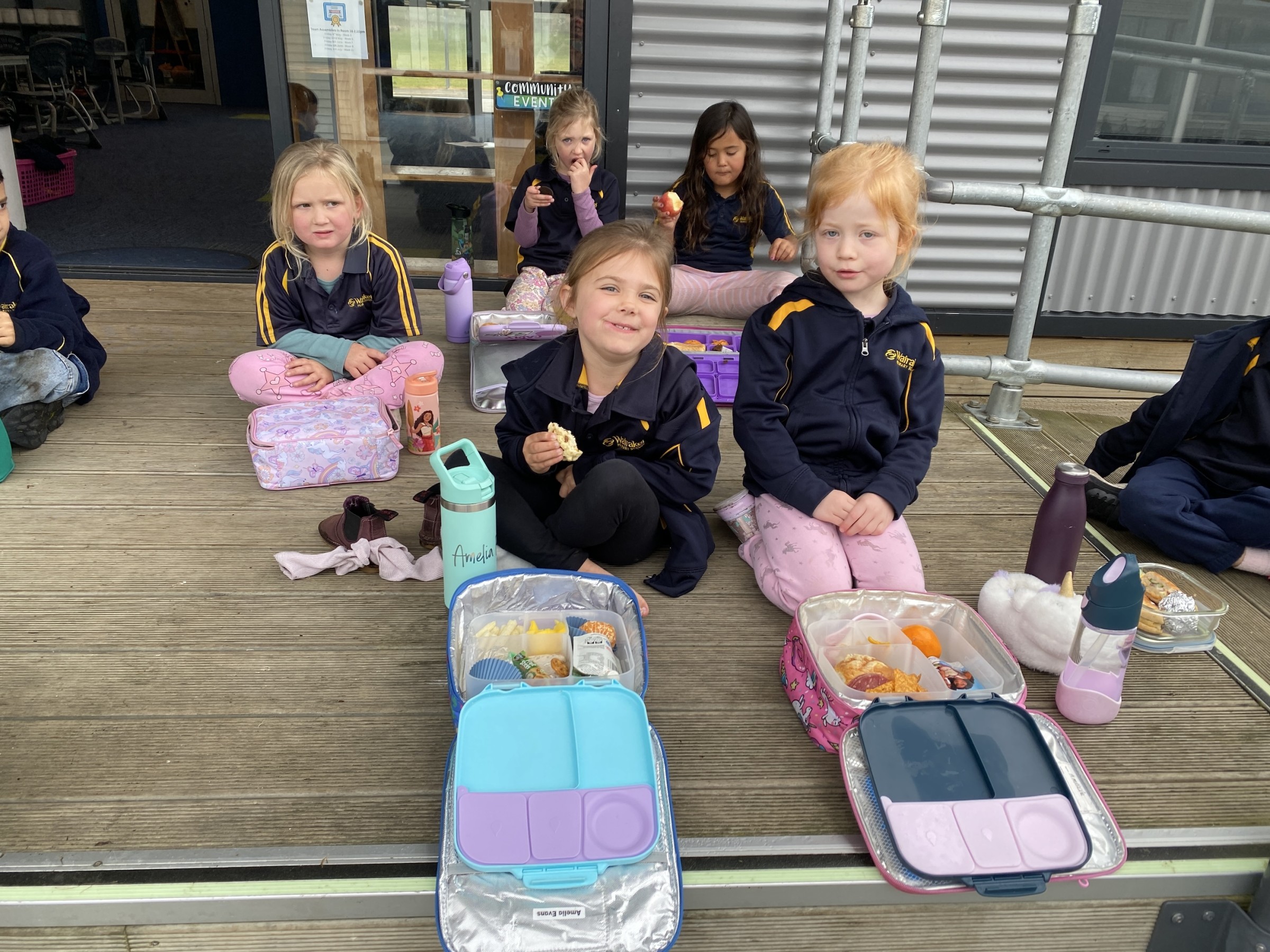
The good news is that with a bit of planning and a flexible approach, lunchboxes can become both nourishing and enjoyable for kids.
Start with balance, not perfection. A healthy lunch doesn’t need to be elaborate. Aim for balance across key food groups:
-
carbohydrates for energy,
-
protein for growth,
-
healthy fats for brain development,
-
fruits and vegetables for vitamins and fibre.
Think of it as building blocks rather than strict rules. For example, a chicken or egg sandwich, a yoghurt, and some cut-up fruit already ticks most boxes.
Keep portions child-sized
Smaller portions that are easy to manage will reduce overwhelm and waste. You can always include a little extra snack if your child tends to get hungry. Bento-style lunchboxes with compartments help visually separate foods and make portions feel more inviting.
Variety keeps things interesting
Children can get bored quickly, even with foods they like. Rotate options throughout the week to maintain interest. Instead of sandwiches every day, mix in wraps, pasta salads, rice balls, or homemade muffins. Leftovers from dinner, like roasted vegetables or chicken, can be repurposed into next-day lunches, saving time and adding variety.
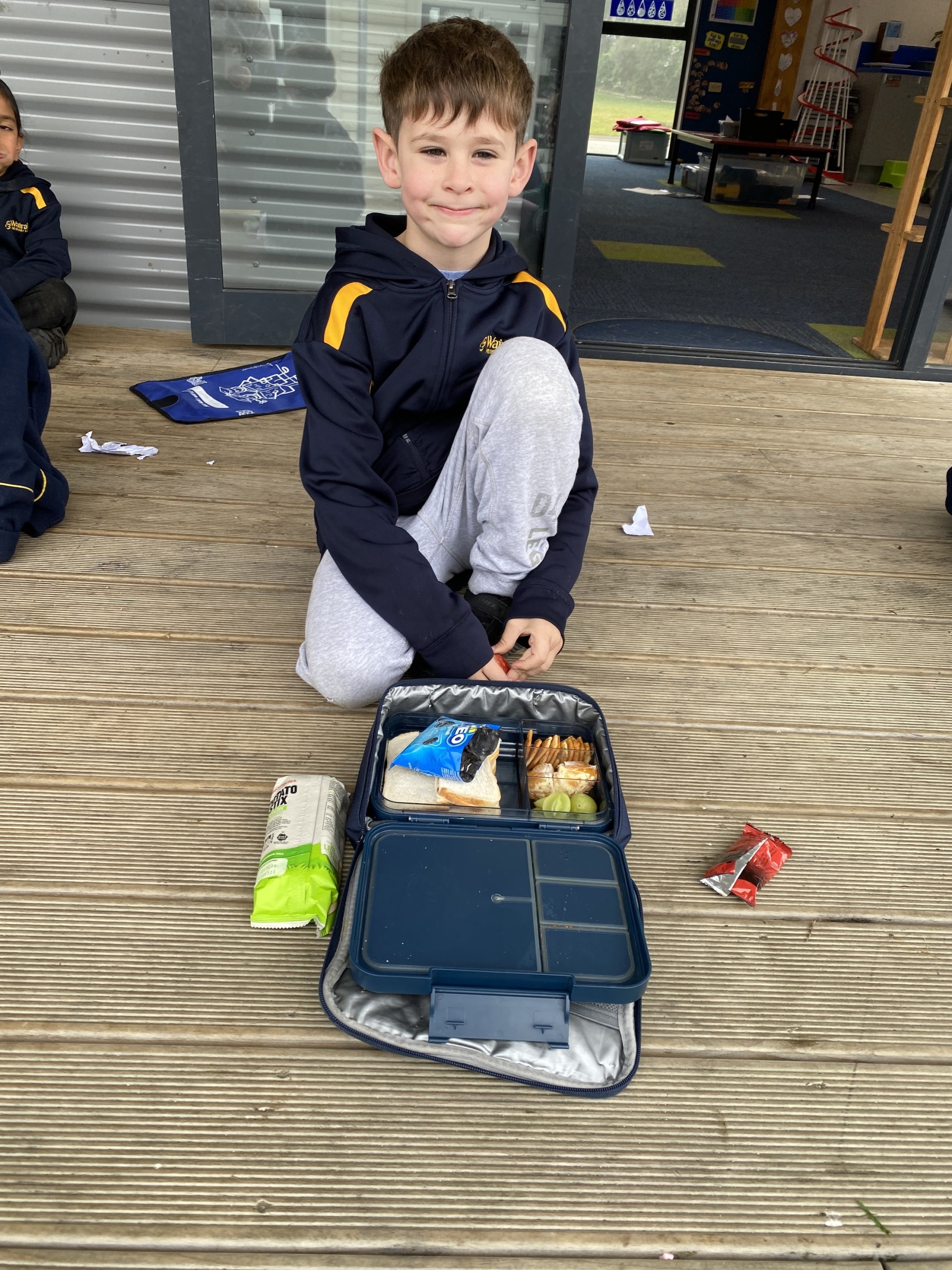
Involve your child
Children are more likely to eat what they’ve helped choose or prepare. Give them some control by offering choices: “Would you like strawberries or an apple?” or “Ham or egg sandwich?” Older kids can help pack their own lunch, which builds independence and awareness of healthy eating habits.
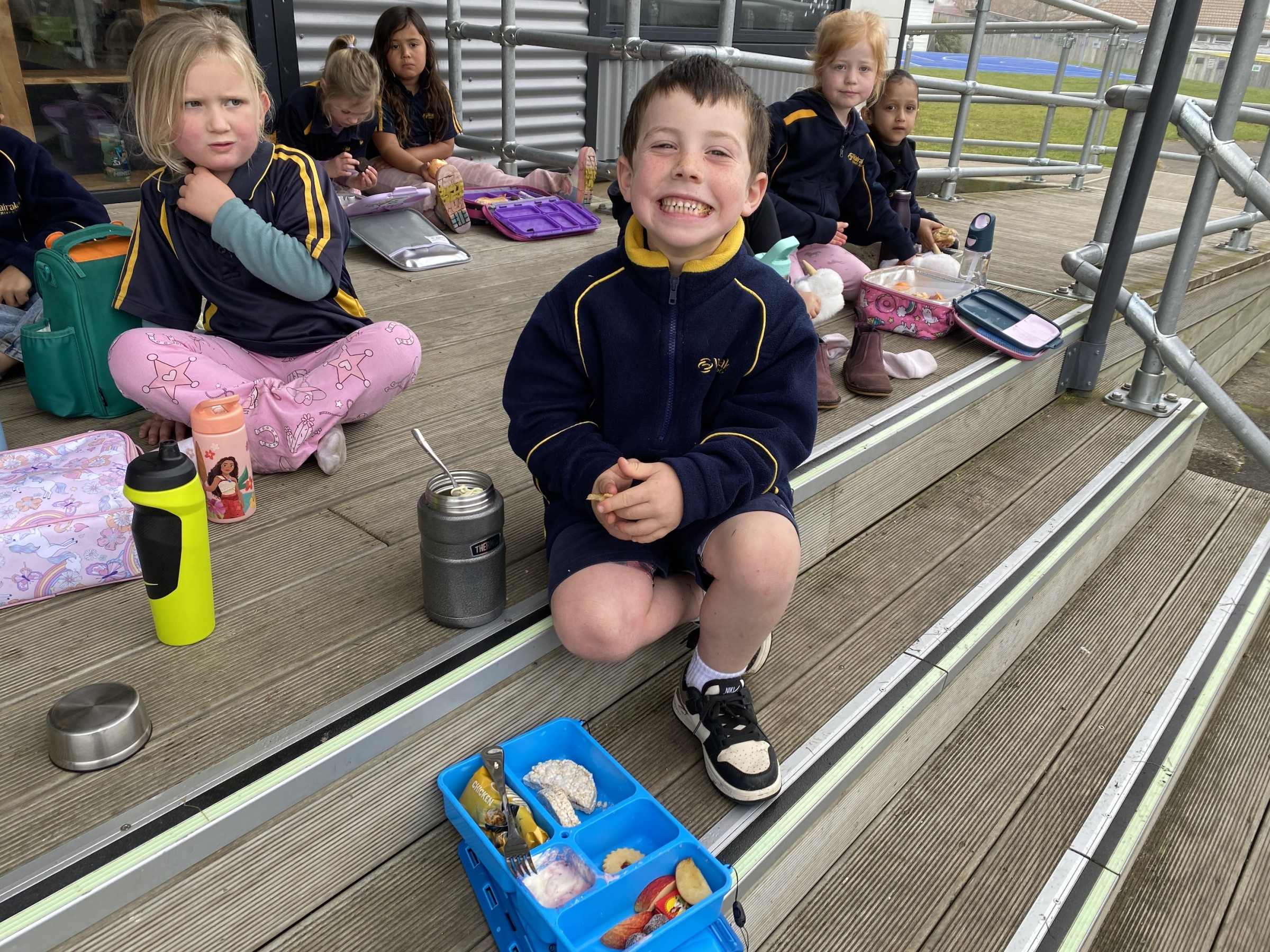
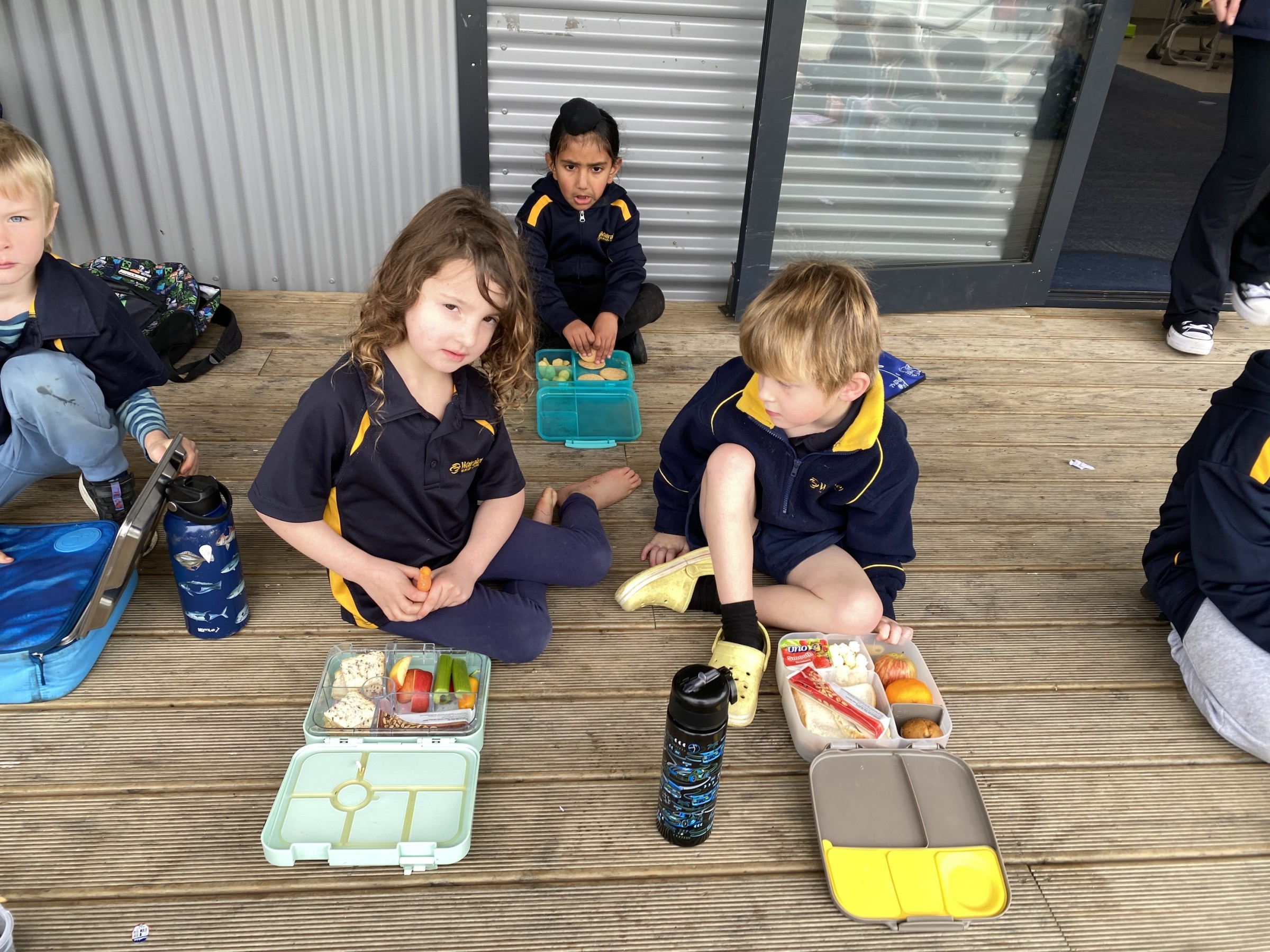
Don’t forget hydration
All children are encouraged to have a water bottle at school. The school has a water and plain milk-only policy. Don’t worry if the water bottle sometimes gets forgotten; water fountains are available at school. Water bottles can also be refilled at the water fountains.
Eating Times
During the school day, there are two set eating times where students must sit down and eat under the supervision of their classroom teacher. Students first eat after their morning tea play at 11am. Lunchtime eating happens after playing at 1:20 pm. The school finds students settle and eat better when they are allowed to eat after they play.
Minimise rubbish
To minimise school rubbish issues, children are expected to take their lunchbox rubbish (wrappers) home in their lunchbox each day. A rubbish-free or bento-style lunchbox removes the rubbish concern and can make eating easier – opening packages is tricky for little hands.
Plan ahead to reduce stress
Mornings can be rushed, so a little preparation goes a long way. Wash and chop fruits and vegetables in advance, or cook extra portions at dinner for leftovers. Even packing lunch the night before can ease the morning routine.
Keep food safe
Use insulated lunch bags and ice packs when needed, especially for perishable items like dairy, meat, or cooked leftovers. This ensures food stays fresh and safe until lunchtime. Some children in your child’s class may have serious food allergies, for example, nuts. Check with your child’s teacher and be respectful of other children’s allergies.
Handle picky eating with patience
It’s normal for children to go through phases of rejecting certain foods. Instead of pressuring them, continue offering a variety of options alongside familiar favourites. A “safe food” you know they’ll eat can help ensure they don’t go hungry, while repeated exposure to new foods gradually builds. If you are concerned about your child repeatedly not eating their lunch, talk to their teacher and work on a plan together.
Treats are okay in moderation
Lunchboxes don’t have to be completely free of treats. A biscuit or a piece of chocolate cake occasionally can be part of a balanced approach. Framing all foods as acceptable (in appropriate amounts) helps children develop a healthy relationship with eating, rather than seeing certain foods as "forbidden".
A realistic approach wins
Ultimately, the “perfect” lunchbox doesn’t exist. Some days will be more balanced than others, and that’s okay. What matters most is consistency over time, offering nourishing options, encouraging positive habits, and reducing stress for both you and your child.
Packing school lunches is an everyday act of care. With a bit of creativity and flexibility, it can also become an opportunity to support your child’s health, learning, independence, and enjoyment of food - one lunchbox at a time.
Follow the link to the New Zealand Heart Foundation's healthy lunchbox ideas website for additional ideas.

Every child deserves to feel valued, respected, and genuinely cared for by their teacher. Creating a classroom where students feel safe, supported, and confident to learn is at the heart of my teaching practice.
I have a passion for all areas of learning, with a particular enthusiasm for mathematics. I enjoy supporting students to make meaningful connections between mathematical ideas, recognise patterns, and develop a deep understanding of how our number system works.
In my classroom, students are encouraged to be brave, collaborative, and open to new challenges. It is a space where taking risks is celebrated, reflection is valued, and success, big or small, is recognised.
Outside of school, I enjoy mountain biking and staying active with my energetic dog, which helps me bring energy and balance to a busy classroom environment. Supporting students to grow, learn, and thrive is at the centre of everything I do, and I am excited to continue this journey at Wairakei Primary School.

Comments
No one has commented on this post yet.